Weights: Complete Strength Training Guide
Weights: The Ultimate MFA Guide to Strength Training Success
Weights are one of the most powerful tools for building muscle, burning fat, and transforming your body. Whether you’re picking up dumbbells for the first time or looking to refine your lifting technique, understanding how to use weights effectively will accelerate your fitness results.
Training with weights isn’t just about aesthetics—it’s about building a stronger, more resilient body that performs better in everyday life. From improved bone density to enhanced metabolism, the benefits extend far beyond the gym floor.
Why Training With Weights Changes Everything
When you lift weights, you create microscopic tears in your muscle fibers. As your body repairs these tears, your muscles grow back stronger and more defined. This process, called muscle hypertrophy, is the foundation of strength training.
But the benefits don’t stop at bigger muscles. Regular weightlifting:
- Boosts your metabolism – Muscle tissue burns more calories at rest than fat tissue, helping you stay lean
- Strengthens bones – Resistance training increases bone density, reducing osteoporosis risk
- Improves functional strength – Everyday tasks become easier when you’re stronger
- Enhances mental health – Lifting releases endorphins and builds confidence
- Supports longevity – Maintaining muscle mass is crucial for healthy aging
Types of Weights You Can Use
Understanding your options helps you choose the right equipment for your goals and training environment.
Free Weights
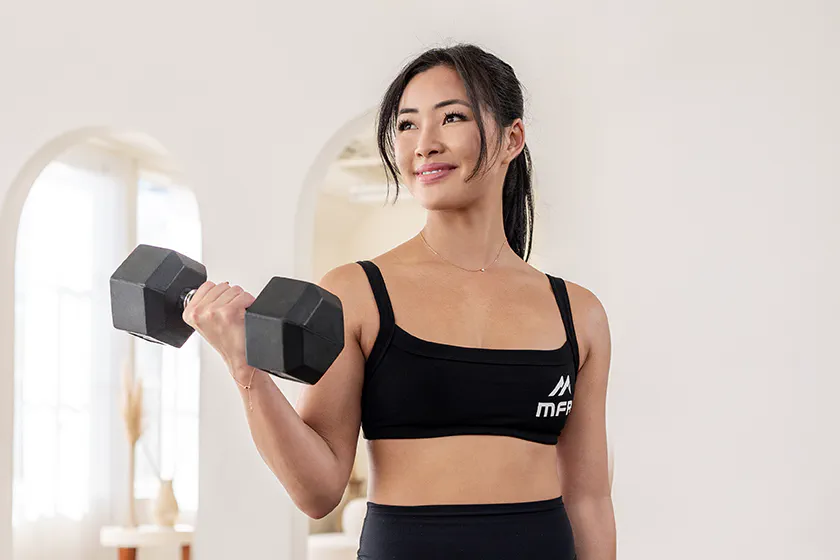
Free weights are perfect for home workouts since they require minimal space and can deliver gym-quality results anywhere.
Dumbbells and barbells are the most versatile training tools available. They require stabilizer muscle engagement and allow natural movement patterns. Free weights are excellent for compound movements like squats, deadlifts, and bench presses.
Kettlebells
These cannonball-shaped weights excel at dynamic, explosive movements. Kettlebell swings, cleans, and snatches combine strength and cardio for efficient full-body workouts.
Weight Machines
Machines guide your movement along a fixed path, making them ideal for beginners learning proper form or advanced lifters isolating specific muscles.
Cable Systems
Cables provide constant tension throughout each movement, offering unique training stimulus that free weights can’t replicate.
How to Choose the Right Weights for Your Level
Selecting appropriate weight is crucial for progress and injury prevention. Here’s how to find your starting point:
For beginners: Start lighter than you think you need. Focus on mastering proper form with weights that allow you to complete 12-15 repetitions with good technique. You should feel challenged by the last few reps but never sacrifice form.
For intermediate lifters: Choose weights that challenge you within your target rep range. If you’re aiming for 8-10 reps, the last two should feel difficult but achievable.
For advanced athletes: Periodize your training with varying weights and rep schemes to continue making progress and avoid plateaus.
A good rule of thumb: if you can easily complete your target reps with perfect form, increase the weight by 5-10% next session.
Essential Weights Exercises for Full-Body Strength
Building a strong foundation requires mastering fundamental movement patterns. These exercises should form the backbone of your training program.
Lower Body
- Goblet Squats – Hold a dumbbell at your chest while squatting to build quad and glute strength
- Romanian Deadlifts – Target your hamstrings and posterior chain with this hip-hinge movement
- Lunges – Develop unilateral strength and balance
Upper Body
- Dumbbell Bench Press – Build chest, shoulder, and tricep strength
- Bent-Over Rows – Strengthen your back and improve posture
- Overhead Press – Develop powerful shoulders and core stability
Core
- Weighted Planks – Add intensity to this foundational core exercise
- Russian Twists – Build rotational strength and oblique definition
For a comprehensive program that incorporates these movements, check out our strength training workouts designed for all fitness levels.
Common Mistakes to Avoid When Lifting Weights
Even experienced lifters fall into these traps. Avoid these errors to maximize your results:
Ego lifting: Using weights that are too heavy compromises form and increases injury risk. Check your ego and prioritize proper technique.
Neglecting progressive overload: Your muscles adapt to stimulus. Gradually increasing weight, reps, or sets over time is essential for continued progress.
Skipping warm-ups: Cold muscles are injury-prone muscles. Always prepare your body with dynamic movements before lifting.
Ignoring recovery: Muscle growth happens during rest, not during your workout. Prioritize sleep, nutrition, and recovery strategies to support your training.
Training the same muscles daily: Muscles need 48-72 hours to recover between intense sessions targeting the same body parts.
Creating Your Weights Training Schedule
Not sure where to start? The MFA free fitness app offers structured beginner programs that take the guesswork out of scheduling your first weight training sessions.
Consistency beats perfection. A realistic schedule you can maintain will outperform an ambitious plan you abandon after two weeks.
For beginners: Start with 2-3 full-body sessions per week with at least one rest day between workouts.
For intermediate lifters: Consider an upper/lower split (4 days) or push/pull/legs rotation to increase training volume.
For advanced athletes: Train 4-6 days per week with appropriate splits that allow adequate recovery for each muscle group.
Home Workouts with Weights: No Gym Required
Weights are the key to unlocking your strongest, most capable body—but having the right guidance makes all the difference. Whether you’re just starting out or ready to take your training to the next level, structured programming eliminates guesswork and accelerates results.
Ready to transform your strength training? Download the MFA free fitness app today and access expert-designed workout programs, video demonstrations, and personalized guidance that helps you train with confidence.