Does Exercise Increase Estrogen? What Women Need to Know

The Role of Estrogen in Female Fitness and Strength
When most of us think about estrogen, we think about how it gives women curves and squishy bits that are beloved by men the world over. Or we think about the hormone in reproductive terms only, i.e., pink-cheeked babies and keeping the species going.
All of our reproductive hormones, especially estrogen, play a key role in many of our body’s critical functions, including cholesterol levels, blood circulation, bone density, and heart, and brain health.
Estrogen can even impact how easy it is to lose weight and get fit. For example, when it comes to exercise and fitness, estrogen impacts:
- Muscle strength
- Exercise recovery
- Metabolism
How Estrogen Works in the Female Body
Estrogen is one of the two hormones in the female reproductive cycle (the other is progesterone). Estrogen fluctuates during menstruation and throughout a woman’s lifespan, dropping to negligible levels after menopause.
Estrogen is primarily produced in the ovaries, but some of the hormone is produced in the adrenal glands and fat tissue. There are three forms of estrogen: estradiol, estrone, and estriol.
Estradiol is the main variation produced before menopause and the most potent form of the hormone, while estrone is a weaker version that is predominant after menopause. Estriol is another weak estrogen, mostly made during pregnancy.
Does Exercise Increase Estrogen? Estrogen and Muscle Growth
Muscle Mass and Strength
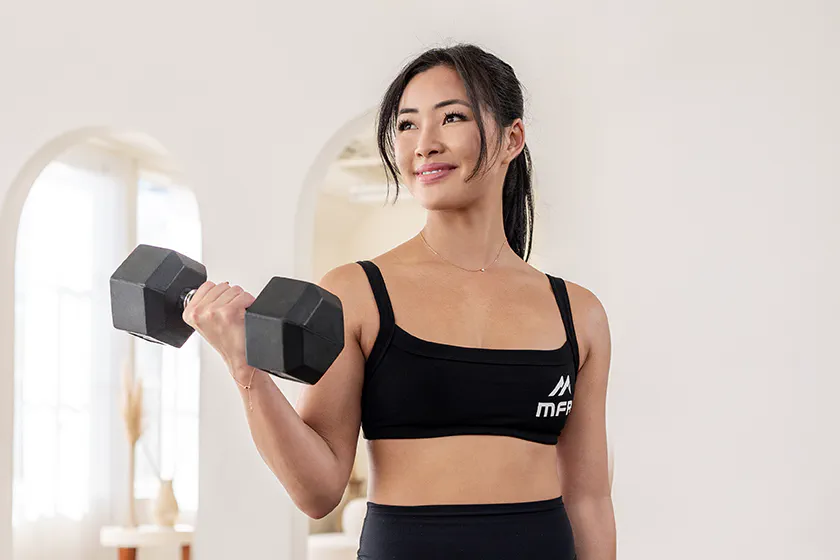
Estrogen helps women build muscle. Yep, the hormone most responsible for soft curves can give you hard biceps. Estrogen receptors are found in skeletal muscle and play a role in muscle growth.
Women often experience a sharp decline in muscle strength and size at menopause due to the loss of estrogen. Hormone replacement therapy can help women maintain muscle mass. If you are in menopause, and interested in trying it, you would need to talk with a doctor to see if you are a candidate. Research is now supporting its use in menopausal women.
Researchers recently found that when estrogen leaves the building, muscle stem cells also disappear. Our bodies need these satellite cells for the growth, repair, and regeneration of skeletal muscle. Estrogen loss also increases the risk of cellular death, which leads to a decrease in muscle.
It’s been said that muscle is the organ of longevity, which is one of the reasons strength training is so important. Women who lift weights two or three times a week actually live longer than those who don’t and are less likely to die from heart problems.
Ready to start strength training? Try our home workouts designed for women at every fitness level—no gym required.
How Estrogen Affects Exercise Recovery in Women
Exercise Recovery
When you exercise hard, you’re putting your body through a lot, and estrogen can help you recover from that exhausting HIIT session. Estrogen reduces inflammation, muscle damage, and soreness.
High estrogen levels can shorten your recovery time as well. Low estrogen leads to an increase in bone fractures and bone loss. Ironically, when estrogen is high, women are more likely to suffer from tendon damage and ligament injuries.
Estrogen levels are highest when women are ovulating (releasing an egg). This is the perfect time to hit the gym hard. It’s a great time for heavy cardio and muscle building, while low-impact exercises are better when estrogen is at its lowest during the luteal phase, which occurs after ovulation.
Alternatively if you don’t have time for the gym, the Mixed Fitness Arts free fitness app can help you with guided home workouts.
Estrogen, Metabolism, and Menopause Weight Gain
Metabolism
Most of us gain weight with age. For women, these changes are related to both aging and hormone loss. As women go through menopause, estrogen decreases, and this not only increases overall weight gain but increases the risk for the dreaded “meno belly”. This means all your extra pounds are more likely to go to your midsection.
As a woman goes through menopause, testosterone, relative to estrogen, can be higher, which means that she may gain weight as men do, in the upper body. Plus, estrogen makes you less likely to pig out because it reduces hunger signals so you don’t eat as much, while the loss of estrogen can increase the hunger hormone ghrelin, making you eat more.
How to Balance Estrogen for Lifelong Women’s Health
Estrogen truly is a girl’s best friend. This multitasking hormone does it all. It protects our hearts, our bones, and our brains. It helps women build muscle, stay strong, and be lean, mean, calorie-burning machines.
When estrogen levels decline, many women notice several undesirable side effects such as weight gain and a harder time recovering after a work-out. That’s why understanding and supporting estrogen balance is essential for lifelong vitality and well-being.
FAQs
Does exercise increase estrogen levels in women?
Estrogen levels are governed by the menstrual cycle and life stage rather than by exercise. They peak during ovulation and drop sharply at menopause. Exercise doesn't significantly raise estrogen on its own; instead, estrogen strongly influences exercise outcomes, shaping muscle growth, recovery, and metabolism in women.
Does strength training lower estrogen levels?
Strength training itself doesn't lower estrogen but it does help women preserve the muscle, bone, and metabolic benefits that estrogen supports. Women who lift weights two or three times a week live longer and are less likely to die from heart problems. Resistance training is especially important as estrogen naturally declines with age.
How does estrogen affect muscle growth and strength?
Estrogen receptors are found in skeletal muscle and play a direct role in muscle growth. Women often experience a sharp decline in muscle strength and size at menopause due to the loss of estrogen, as muscle stem cells disappear alongside it. Regular strength training helps offset this loss and maintain muscle mass.
When is the best time in your cycle to train hard?
Estrogen levels are highest during ovulation, making it the ideal window for heavy cardio and intense muscle building. During the luteal phase that follows ovulation, when estrogen is at its lowest, low-impact exercises are better tolerated. Aligning training intensity with your hormonal cycle supports better performance and recovery.
Why does low estrogen cause weight gain during menopause?
As estrogen decreases during menopause, overall weight gain increases — and extra pounds are more likely to settle around the midsection, the so-called meno belly. Low estrogen also raises the hunger hormone ghrelin, making appetite harder to control. A relative rise in testosterone shifts fat storage to the upper body, similar to male patterns.
How does estrogen affect exercise recovery in women?
Estrogen reduces inflammation, muscle damage, and soreness after hard workouts, helping women bounce back faster from intense sessions like HIIT. High estrogen levels can shorten overall recovery time. However, when estrogen is high, women face a greater risk of tendon and ligament injuries, while low estrogen raises the risk of bone fractures.
 Kaye Smith, PhD, is a seasoned behavioral health coach and psychologist with a specialization in women’s sexual health. With 20+ years of experience spanning psychotherapy, academia, and content development, she supports women managing anxiety, depression, stress, and menopause. Dr. Smith has contributed to the work of renowned sexologist Dr. Betty Dodson and written for platforms including Hello Clue, O.school, and Medium. Leveraging expertise in CBT, mindfulness, and motivational interviewing, she delivers clear, evidence-based insights on mental health and wellness.